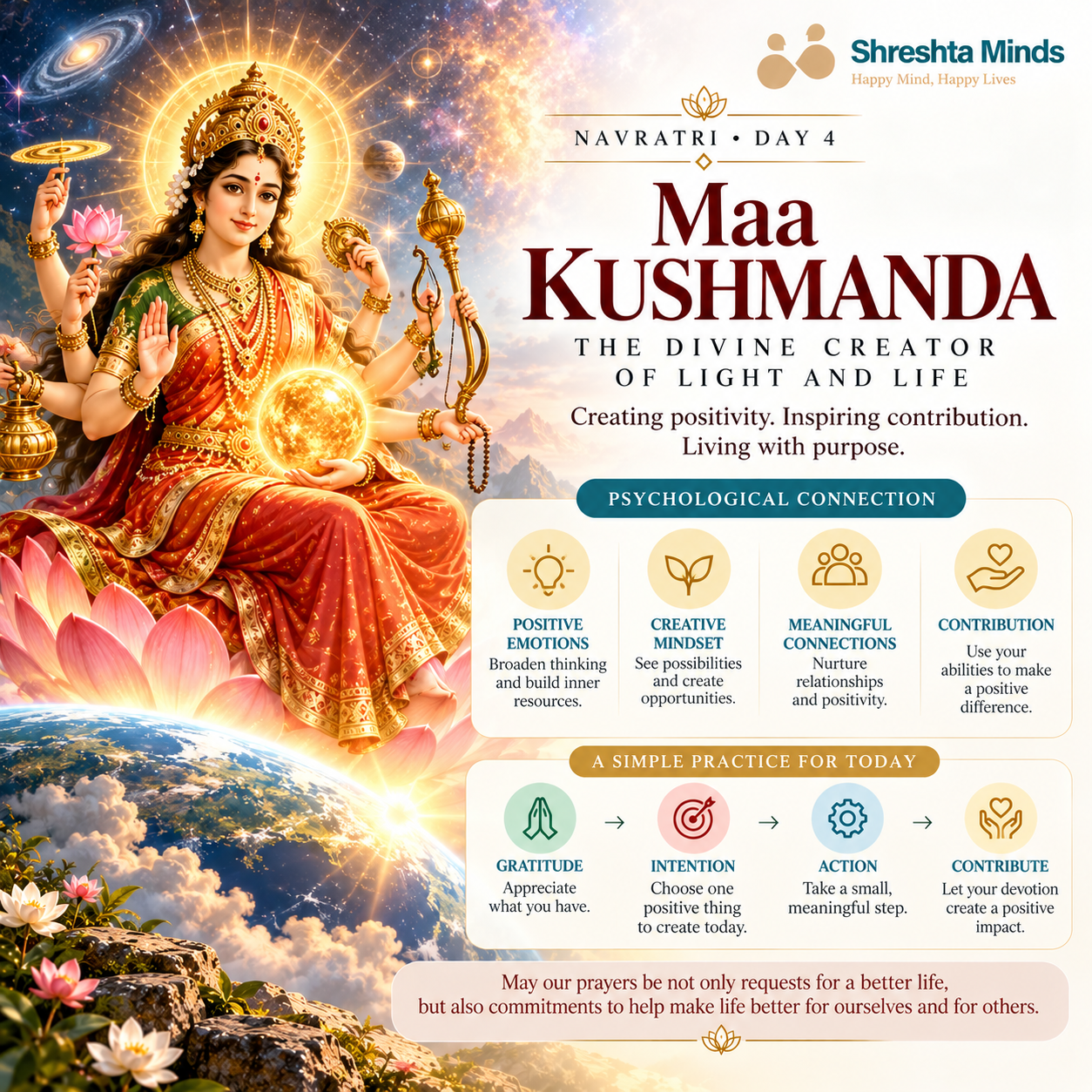
“Psychology of Maa Kushmanda”
Navratri Day 4 | From Divine Creation to Human Potential
What are we creating through the way we think, speak and live each day?
On the fourth day of Navratri, devotees worship Maa Kushmanda, traditionally revered as the divine force associated with the creation of the universe. Her radiant form symbolises the emergence of life and light from primordial darkness.
Beyond its spiritual significance, this imagery invites a profound psychological reflection: human beings are not merely experiencing life; through their choices and actions, they are continually shaping it.
Psychology recognises that our experiences are influenced not only by external circumstances but also by how we interpret situations, respond to emotions and engage with others. A kind word can strengthen a relationship. An encouraging response can help someone rediscover confidence. A thoughtful decision can create possibilities where none seemed apparent.
This does not mean that positive thinking can control every outcome. Rather, it reminds us that although we cannot create every circumstance, we can consciously influence what we contribute to it.
Research in positive psychology offers an interesting connection and proposes that positive emotions such as joy, interest and contentment can broaden our momentary thinking and help build enduring psychological and social resources. Positive emotions do not eliminate suffering, but they can support our capacity to explore, connect and respond constructively.
Maa Kushmanda’s symbolism of creation can therefore inspire us to cultivate more than personal happiness. It can encourage us to create understanding instead of unnecessary conflict, opportunities instead of discouragement, and meaningful connections instead of indifference.
This perspective can also transform the way we pray. Instead of asking only, “Mother, what will You give me?”, we may also ask, “Mother, what good can I create with the life, abilities and opportunities I have received?”
Such a prayer does not replace devotion; it gives devotion a practical expression. Gratitude becomes appreciation for what we have. Intention becomes a commitment to constructive action. Faith becomes an inspiration to contribute meaningfully.
A reflection for today: After your prayer, identify one positive thing you can create—a moment of encouragement, an act of generosity, a new idea or a small step towards improving someone’s day. Let your devotion find expression in that action.
Maa Kushmanda reminds us, through her sacred symbolism, of the wonder of creation. Psychology helps us recognise how our emotions, choices and relationships can influence the small world we shape around us.
This Navratri, let our prayers be not only requests for a better life but also commitments to help make life better—for ourselves and for others.
Rakesh Babu
Psychologist | Faculty @ The Art Of Living
www.shreshtaminds.com


SSS
Such a beautiful wisdom 🙏🪷