Addiction Relapse is Ok!

Addiction Relapse is Ok! Don’t Isolate & corner them. Show some kindness!
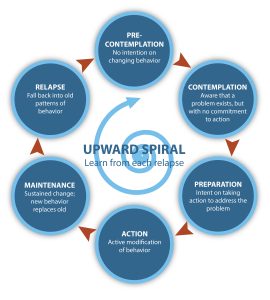 In the THE TRANSTHEORETICAL MODEL OF CHANGE, Relapse is one of the stages of intentional behavior change.
When it comes to substance addiction, many victims are very much aware that they are harming themselves. Out of which, a considerable percentage of people wish to come out of it. Very few seek support from family members. Most times, addicted people are taken to therapists/counselors or to rehabilitation centers.
Rather generalizing, it is seen that many are coming out of this issue and leading happy and peaceful life. Most of them fall into the stage called “RELAPSE”. Relapse is the resumption of substance use after an attempt to stop or period of abstinence. For example, someone who returns to drug use after months in rehab would be experiencing a relapse.
I would like to highlight this stage “Relapse” in this article. It is Ok to fall in relapse stage. It will make them to understand the severity of the issue that has happened to them. In fact, the therapists can use this situation positively to help the clients. When the client feels guilty, it is the best stage to re-iterate the importance of health (physical & mental), relationship, identity in society.
The reason for me to write this article is, I have seen a person who was in relapse stage and got rejected by therapist (so called), got stigmatized by family members, friends detached their company and this person had to encounter deep depression and the family lost a good human.
 Love and compassion will certainly work in this situation. Rather stigmatizing, blaming and put them in a corner, if they are attended rightly by learned professional and kind-hearted people. They can come back to normal life. As shown in the picture, it is a cycle of change. Sometimes, two, three or more relapse may occur. However, if the victim is surrounded by a humanistic environment, there are lot of chances to bring back them to normalcy.
Point to be noted is, there may be situations where right treatment to be given and all stages of prevention methods to be introduced to avoid relapses. Family therapy to be given to people around the person. They should be properly educated about the consequences. CARE is more important. In the case of young adults, it is necessary to inculcate moral values. It is quite challenging during the treatment, however, it can also play a pivotal role in rehabilitation.
 The ten processes of change include:
- Consciousness-raising (Get the facts) — increasing awareness via information, education, and personal feedback about the healthy behavior.
- Dramatic relief (Pay attention to feelings) — feeling fear, anxiety, or worry because of the unhealthy behavior, or feeling inspiration and hope when hearing about how people are able to change to healthy behaviors.
- Self-reevaluation (Create a new self-image) — realizing that the healthy behavior is an important part of who they want to be.
- Environmental reevaluation (Notice your effect on others) — realizing how their unhealthy behavior affects others and how they could have more positive effects by changing.
- Social liberation (Notice public support) — realizing that society is supportive of the healthy behavior.
- Self-liberation (Make a commitment) — believing in one’s ability to change and making commitments and re-commitments to act on that belief.
- Helping relationships (Get support) — finding people who are supportive of their change.
- Counterconditioning (Use substitutes) — substituting healthy ways of acting and thinking for unhealthy ways.
- Reinforcement management (Use rewards) — increasing the rewards that come from positive behavior and reducing those that come from negative behavior.
- Stimulus control (Manage your environment) — using reminders and cues that encourage healthy behavior and avoiding places that don’t.
Psychologist or community care workers should help Addicts who are in relapse stage with love & compassion which can heal them emotionally, mentally & physically! Let’s live with love and humanity. Love moves the world.
Disclaimer: The pictures attached in this article are taken from different sources in websites. Credits to the original creators. Special thanks to wikipedia.
Sources: wikipedia, google scholar, wellness blogs, science direct and rural health
In Gratitude,
N.R.Rakesh Babu
Psychologist | Doctoral Researcher
www.rakeshbabu.com | www.rbac.in

 Twenty years ago, while riding in a New York City taxi, syndicated columnist and business consultant David J. Pollay narrowly escaped a life-threatening car crash. The driver who almost caused the accident and started yelling at the cab driver, who remarkably just smiled, waved, and wished him well. Pollay asked how the cabbie could remain so calm, and his response sparked the defining principle of The Law of the Garbage Truck.