Possessiveness – A Poison Of The Mind

#Possessiveness is a #Poison of the #Mind!
It is not just poison, it is a #pain too. Experts says that Possessiveness is due to unrealistic expectations.

This happens with people, money, things etc., It becomes danger when it crosses the boundary in relationships. Relationships may be between parents and children, life partners, friends, office colleagues. At some point, the “so called” CARE will change into “Over Protectiveness”. This will be a real torture to the partner.

Possessiveness is kind of a mental pressure that the person encounters and also radiate it to the counterparts. It is a fear of loss of belongings, persons etc., This creates fear, anger, anxiety and loneliness.

Trust is a vital aspect of a healthy relationship. In order to trust, you must feel your partner is reliable, cares about you, and can be counted on. You can see abusive relationship when the partner lose the trust. They feel insecured.

In the name of love and care, they do overprotection!
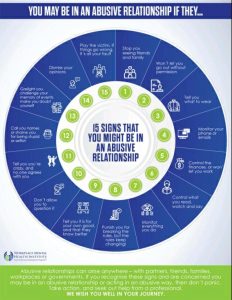
✍️ Few Signs of Possessiveness:

  • Monitor your phone and emails.
  • Tell what to wear.
  • Text you nonstop.
  • Control you and rob your privacy.
  • Gaslight you.
  • Stop you talk to your friends.
  • They will be jealous
  • In the name of protection, they will restrict you from being connected to the social network.

It is imperative to understand that the partner is possessive at early stage. Talk to them that it is not good for the relationship. It will ruin the happiness in between them. It will affect physically, mentally and emotionally.

It will reduce the self-esteem, confidence, trust.

Possessiveness is not love, it is simply projected fear and insecurity.

Either, they can sit and talk about this to overcome this issue. Else, they need strong support from a Psychological Consultant.

Some may ask, how come a third person can help them in such issues. It is similar to a patient approaches doctors for their health issues.

Licensed or Authorized and Competent #Psychologists, #Therapists, #Relationship #healers can certainly help them when they themselves are unable to deal with this problem.

✍️ How to deal the possessive partner?

  • Love them and give little extra care
  • Listen to what they say and address the problem
  • When they want to talk to you, be available for them.
  • Communicate properly and set proper, realistic goals.
  • Don’t argue or justify for what you have done.

Appreciating your comments on this topic.

Disclaimer: Image source – Workplace Mental Health Institute. With gratitude, sharing the image for knowledge sharing.

In Gratitude,

N.R.Rakesh Babu
Psychologist | Doctoral Researcher
www.rakeshbabu.com | www.rbac.in
Overthinking will rob your peace

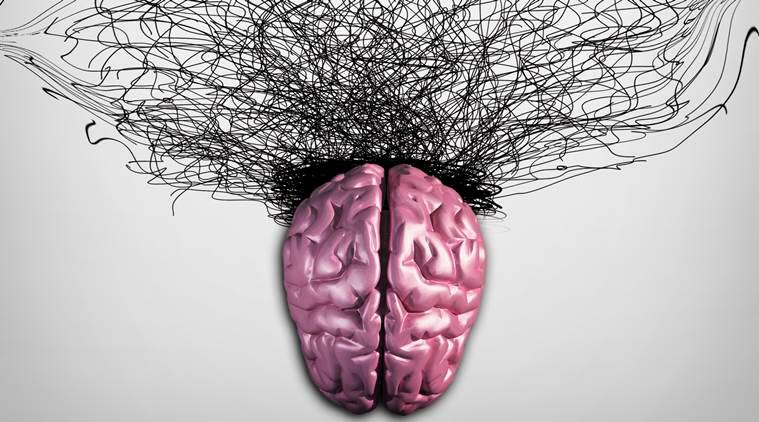
Think….Think….Think…and over a period it will become overthinking. Overthinking causes unnecessary stress. It is not a good habit to possess. You can observe your thoughts clearly when you remain calm.

If you are thinking more than 10 to 15 minutes, it will be about the past happenings or the future or upcoming events. Beauty on overthinking is, you will dwell in the past or future and will not come to the present.

Actually the calmness and steadiness will be in the present and not in past or future. The more you dwell in past or future, observe your breath. It will be restless and will be in abnormal rhythm. This is not good for health. It will create multiple physical and psychological issues.

At this time, you will be emotionally weak. Your decision making will be poor. Thoughts will be like ripples of water when stone is thrown on it. Overthinking will rob your happiness and thoughts will be distorted. Instead of solving the issues, your mind will be wavering. You will become a fearmonger of your own self.

In one of the life skill classes, my mentor taught me that:

Past is like broken glass pot – You cannot fix the broken pot

Future is like cat on the wall – you don’t know where this cat will fall from the wall.

Present is the treasure. – It is right there with you – “The Now” moment.

An easy tip for you to bring yourself back to the present moment is through your breath. Observe your breath. Take few long deep breaths. Settle down and slowly come back to the present moment. It will be challenging while you start practicing. However, it will become a habit on regular practice.

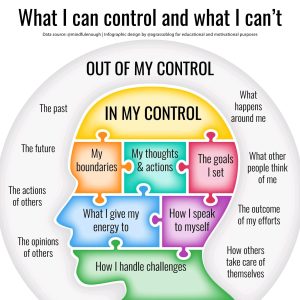
Few things are out of your control and few are in your control. When you understand these TWO differences, life will be easy and it will prevent from overthinking.

Things that you cannot control:

  • The past, future and it’s occurrences.
  • You cannot control what others are thinking about you or their opinions.
  • Similarly, you cannot control their actions.
  • Whatever is happening around you.
  • Obviously the results of your efforts.

Things that You can control:

  • Your boundaries as where to pitch in and where you should not poke your nose.
  • Your thoughts and actions.
  • Your goals and objectives.
  • Where you should channelize your energy.
  • How you should interact with yourSELF.
  • How do you handles your challenges.

Without having awareness on what you can and cannot control, you will end up in overthinking and your energy will get drained unnecessarily.

Wake up; Shake Up. Be with people who can uplift you morally even in crisis. Surround with positively interacting communities who can see your elevation. Do not do or think anything that harm your mental wellness. Be happy with what you have and even if you do not have anything, be grateful that you have LIFE with you to live to the fullest.

The entire world is creating emotional pollution by accumulating unwanted thought processes and this is not good for the ecosystem. It is right time that we should be in peace and help others to be in peace.

Let’s live in peace and not rest in peace.

Disclaimer: Image credits to the original creator and I, the author of this article doesn’t claim any credit for the images attached.

In Gratitude,

N.R.Rakesh Babu
Psychologist | Doctoral Researcher
www.rakeshbabu.com | www.rbac.in

Hypothalamus & Body’s Stress Response!

Learning little knowledge about Brain and Mind connection helps us to live healthily and happily!


Hypothalamus:

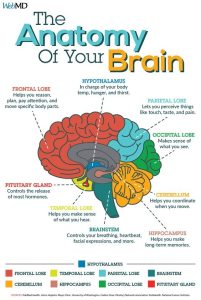
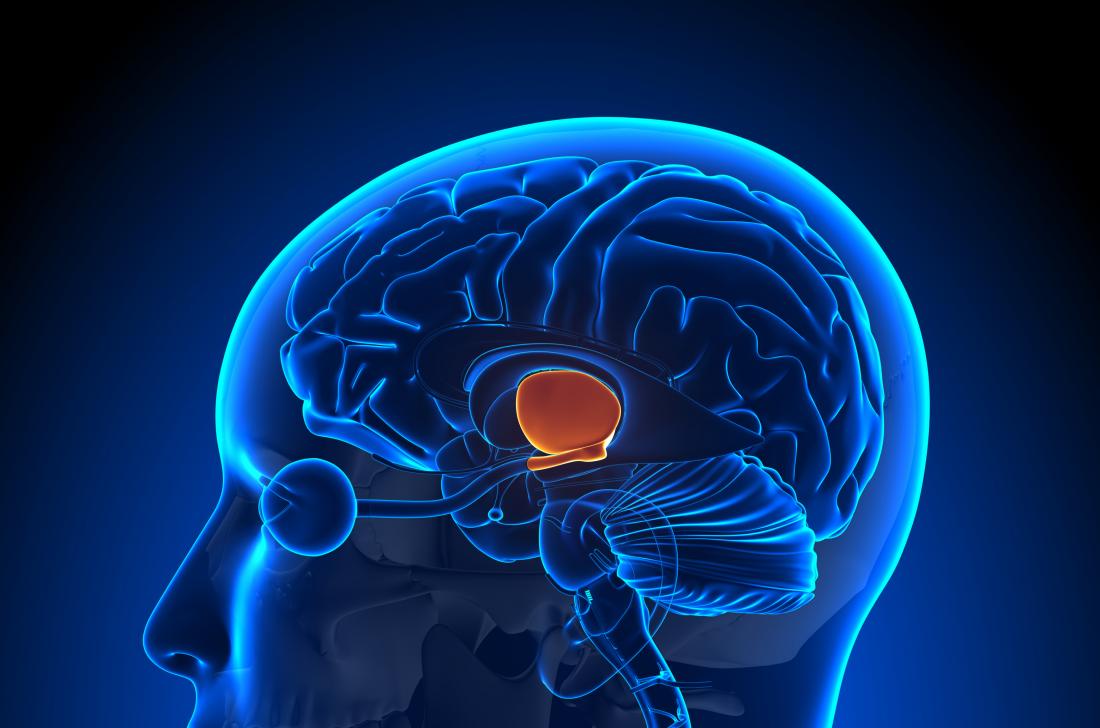
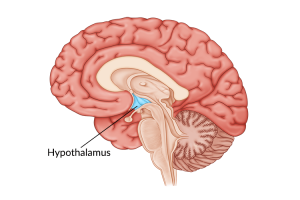
It is a structure deep in your brain, acts as your body’s smart control coordinating center. Its main function is to keep your body in a stable state called homeostasis. It’s the main link between your endocrine system and your nervous system.

It is and almond sized and is located below the thalamus and above your pituitary gland. It is located just above the brain stem at the base of your brain.

Main Functions of Hypothalamus are:

  1. Releasing hormones.
  2. Maintaining daily physiological cycles.
  3. Controlling appetite.
  4. Managing sexual behavior.
  5. Regulating emotional responses.
  6. Regulating body temperature.

Hypothalamus & Body’s Stress Response:

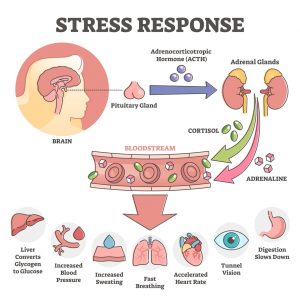
Cortisol is an essential hormone that affects almost every organ and tissue in your body. Regulating your body’s stress response is Cortisol’s main function.

When a person is in stress, the heart-rate increases, immune system slows down and in fact the digestive system will be altered.

Upon stress, the hypothalamus releases a hormone that travels to your pituitary gland, which then tells your adrenal glands to release cortisol. However, when the stressful situation gets normal, your cortisol levels up and body’s functions will become normal.

It helps in controlling body metabolism & reduce inflammation.

Cortisol can seriously hurt your body whether it is little or much, so the hypothalamus carefully regulates the amount circulating. If a person has chronic stress, the hypothalamus and the rest of the system is activated more often than it should be.

When the body has so much cortisol from chronic stress, it gets used to these high levels. So when you have a stressful situation later, your hypothalamus has to release more cortisol to get an appropriate stress response. This leads to a cycle where your body has to keep releasing more cortisol after every stressful event, which can cause other health issues including anxiety, digestive problems, depression, heart disease, and more fun things literally no one wants.

How to balance Cortisol – For Stress Free & Happy Life?

  1. Aim to reduce stress – Breathe well, Exercise, Engage with your interested hobbies.
  2. Good Diet – Fruits (bananas), Probiotic food, fibrous food etc.,
  3. Enough Rest – Sleep well, lower down screen time.
  4. Relaxation Techniques – Meditation, breathing exercises.
  5. Have Fun – Be with people who can make you smile and laugh, go out.
  6. No Caffeine at Night – Caffeine can interfere with a good night’s sleep.

Other Hypothalamus Releasing Hormones & it’s Effects.

Primary hormones secreted by the hypothalamus include:

  • Anti-diuretic hormone (ADH): This hormone increases water absorption into the blood by the kidneys.
  • **Corticotropin-releasing hormone (CRH):** CRH sends a message to the anterior pituitary gland to stimulate the adrenal glands to release corticosteroids, which help regulate metabolism and immune response.
  • Gonadotropin-releasing hormone (GnRH): GnRH stimulates the anterior pituitary to release follicle stimulating hormone (FSH) and luteinizing hormone (LH), which work together to ensure normal functioning of the ovaries and testes.
  • Growth hormone-releasing hormone (GHRH) or growth hormone-inhibiting hormone (GHIH) (also known as somatostain): GHRH prompts the anterior pituitary to release growth hormone (GH); GHIH has the opposite effect. In children, GH is essential to maintaining a healthy body composition. In adults, it aids healthy bone and muscle mass and affects fat distribution.
  • Oxytocin: Oxytocin is involved in a variety of processes, such as orgasm, the ability to trust, body temperature, sleep cycles, and the release of breast milk.
  • Prolactin-releasing hormone (PRH) or prolactin-inhibiting hormone (PIH) (also known as dopamine): PRH prompts the anterior pituitary to stimulate breast milk production through the production of prolactin. Conversely, PIH inhibits prolactin, and thereby, milk production. **Thyrotropin releasing hormone (TRH):** TRH triggers the release of thyroid stimulating hormone (TSH), which stimulates release of thyroid hormones, which regulate metabolism, energy, and growth and development.

Let’s know more about brain; stay healthy and stress free.

Disclaimer: The images are taken from different sources of website. Factual information has taken from wikipedia and trusted sources in website. All credits goes to the original creators. This article is posted only with the intention of knowledge sharing.

In Gratitude,

N.R.Rakesh Babu
Psychologist | Doctoral Researcher
www.rakeshbabu.com | www.rbac.in
Meditation Helps in Brain Functions

“Brilliant things happen in calm minds. Be calm. You’re brilliant.”

Hectic Deadlines, arguments, targets, inter-personal and intra-personal issues, social life imbalances, poor work-life balance, dealing with losses etc., creates more stress. Meditation has emerged as an antidote to ubiquitous stress. Meditation is a tool to calm down and help you relax and unwind in just a few minutes.

Approximately there are more than 3,000 scientific studies are done with meditation to prove scientifically that meditation helps our body and mind. The reasons to meditate can be physical, mental, emotional as well as spiritual.

Meditating for minimum 15 – 20 minutes daily for a few weeks brings transformation in our life. When we practice meditation regularly, it helps to:

  • Improve your mental health Reduce anxiety
  • A feel of personal growth
  • Reduce depression
  • Increase your peace of mind
  • Lower levels of stress hormones
  • Get a better quality of life
  • May reduce blood pressure

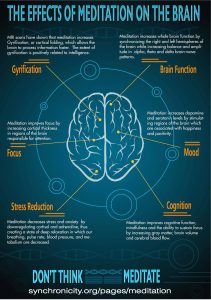
Effects Of Meditation On Brain:

  1. Meditation for Stress Reduction: Meditation helps to decrease the stress revel by regulating the cortisol and adrenaline. It develops a state of deep relaxation in which our breathing, pulse rate, blood pressure are balanced and can helps o bring down to normal rate. When you are stress, check out your pulse rate and breathing pattern, it would be abnormal. Thus, meditation helps in stress reduction.
  2. Meditation Improves Cognition: Meditation helps to improve cognitive function, mindfulness and to focus clearly by increasing the gray matter, brain volume and cerebral blood flow. It has been termed as a powerful fuel to increase your productivity. It also increases the blood flow to brain, it creates a strong network in cerebral cortex and reinforces the memory capacity.
  3. Meditation for Mood Stability: Meditation helps to increase the brain chemicals such as serotonin and dopamine levels by stimulating brain regions which are connected with positivity and happiness. Meditation decreases mood disturbances, anxiety and fatigue. It can also reduce the behavioral anxiety response in psychosocial stress.
  4. Meditation for Laser Sharp Focus: Meditation increases focus and concentration/attention span. By increasing the cortical thickness in the region of brain responsible for attention, focus gets improved. Researchers from Columbia University found that meditation can change the structure and functions of the brain.
  5. Meditation Increases Brain Function: It helps in synchronizing the right and left hemispheres of the brain while increasing balance and amplitude in alpha, theta and delta-wave patterns. Meditation can thicken the pre-frontal cortex. This helps in increased concentration, awareness, execution and decision making.

The above given points are very few to touch upon. However, meditation helps in larger extent for Brain and Mind. There are occasions where meditation can do adverse effect. Meditation can act as a stressor in vulnerable patients who may develop a transient psychosis with polymorphic symptomatology. In such cases, advice from the mental health practitioner helps to put things better. Clinically if it is advised not to meditate, then patients should listen to it.

Learn from the Master: It is good that one can start practicing meditation from a trained master under his supervision rather self-teaching. After a point of time when you practice it with more focus, you may not need the help of instructor. Meditation instructor will help you understand the nuances, science behind the meditation and can clear your doubts if any you have.

Disclaimer: The image has taken from synchronicity website as they have posted it as free image for sharing. Credits to the original creator.

In Gratitude,

N.R.Rakesh Babu
Psychologist | Doctoral Researcher
www.rakeshbabu.com | www.rbac.in
World Brain Day | July 22 | Theme of the Year – “Brain Health For All”

The most fascinating organ in our body is Brain. Most of my articles hovered over BRAIN. It’s “World Brain Day – July 22”. The World Federation of Neurology has declared July 22 as World Brain Day with a bid to increase public awareness and promote advocacy related to brain health.

Theme of this year is “Brain Health For All”. A much needed theme. Not only in the perspectives of the medical importance, but also in the psychological aspect. Actually, it is a resilient year for every one of us after pandemic, a threatening war between Ukraine and Russia, more disease threats and economic imbalances in the World.

To cope with the situation better for the peaceful life is to understand our Brain, it will be easy to handle ourselves better.

According to World Health Organization, Good brain health is a state in which every individual can realize their own abilities and optimize their cognitive, emotional, psychological and behavioral functioning to cope with life situations.

  1. Awareness: Both physiological and psychological significances to be educated and for that more awareness campaigns to be executed.
  2. Resource & Access: Ready reckoners and easily available resources, easy access to rehabilitation and treatment.
  3. Educate: As I mentioned above, education sector should take more care on this. Include scholarly articles, recent researches and updates on Brain in schools and colleges.
  4. Humanity: For optimal Brain Health, more hands to be joined globally.
  5. Prevention: In a recent seminar that I have attended on “Substance Abuse and Brain Damage”, the resource person from India’s renowned Mental Health Organization thrown a light on the mix. He said, many Brain diseases are preventable. Prevention is Better Than Cure.
  6. Feed The Needy: Malnutrition is another alarming area to be looked upon. Multiple sclerosis, Parkinson’s disease, neuroinfections, brain tumors, traumatic injury and neurological disorders are resulting from malnutrition

By dragging attention to this complex organ will emphasize the significance of brain and its vital role in controlling all aspects of collective human life.

Let’s inspire with our action and we can achieve Brain Health for All.

Wishing healthy and peaceful life to everyone!

Disclaimer: Credits to World Federation of Neurology for this wonderful initiative. The image and technically necessary points have been taken from their campaign. The intention is just to promote the awareness about this Special Day. Whole credits to them.

In Gratitude,

N.R.Rakesh Babu
Psychologist | Doctoral Researcher
www.rakeshbabu.com | www.rbac.in
How Gut Bacteria Affects Body & Brain?

How #Gut #Bacteria Affects our #Brain & #Body?

Read an #article, thought of sharing the information with this community of #aspirants.

Our bodies are made of more bacteria than human cells, and the gut alone contains trillions of microbes (bacteria and fungi). In fact, it’s estimated that the body is composed of 10 times more bacteria than human cells.

And the intestines are home to more bacteria than any other part of the body, including the skin. Now, #scientists are devoting increasing amounts of #time and #resources to understanding the gut ‘microbiome,’ as the massive collection of bacteria and microbes is called — and the influence it may exert on the brain and body. The National Institute of Health’s Human Microbiome Project, for instance, is devoting millions of research dollars to understanding the #microorganisms living within the human #ecosystem.

Of particular concern among scientists and the public is the effect that gut flora may have on mental health, as a mounting body of research suggests that gut bacteria can have a significant impact on the way we think, feel and behave, and also on the development of neurological conditions. Last year, a major neuroscience symposium called the investigation of gut microbes a “#paradigm shift” in brain science.

A number of #diseases and disorders have been linked to abnormalities or instability in gut flora, and the microbiome is an important area of research for these conditions. However, it’s important to note that while research has linked these conditions to alterations in the microbiome, it does not mean that in every case gut bacteria is the cause of the problem.

Some of the impacts are: Depression | Anxiety | Schizophrenia | Autism | Obesity & Diabetes | Parkinson’s Disease | Crohn’s Disease | Colon Cancer | Rheumatoid Arthritis | Irritable Bowel Syndrome.

Research Sources are mentioned in the attached picture. Recent researches may improvised the findings and working on the gaps.

Wishing everyone a healthy brain and pleasant mind!

#research | #neuroscience | #science | #mentalhealth | #health | #development | #psychology | #psychologystudent | #psychologyresearch | #researchscholar | #phd | #linkedinlearning | #linkedinforcreators | #linkedin | #psychologists

In Gratitude,

N.R.Rakesh Babu
Psychologist | Doctoral Researcher
www.rakeshbabu.com | www.rbac.in
Amazing Facts About Brain

“Your brain is the organ of your personality, character, and intelligence and is heavily involved in making you who you are.” – Dr.Daniel G. Amen (Psychiatrist and Brain Disorder Specialist)

The brain is a complex organ that controls thought, memory, emotion, touch, motor skills, vision, breathing, temperature, hunger and every process that regulates our body. Together, the brain and spinal cord that extends from it make up the central nervous system.

The human brain color physically appears to be white, black, and red-pinkish while it is alive and pulsating. Images of pink brains are relative to its actual state.

Let’s see some facts about Human Brain!

  1. Brain storage is virtually unlimited.
  2. Brain contains 100 Billion Neurons.
  3. We would have heard that only 10% of our brain is what we use. It is a MYTH. Actually we use all part of our brain, even while we sleep.
  4. Brain weighs about 3 pound (1.3 Kg).
  5. Human brain can generate approximately 20 watts of power.
  6. 25% of cholesterol in our body resides in brain.
  7. 60% of brain is fat.
  8. Men’s brain are 10% bigger than Women’s brain.
  9. Women’s brain have more grey matter and larger hippocampus which involves in emotional processing.

  1. The Neocortex accounts for 76% of the Brain’s mass.
  2. Brain development keeps processing until your late 40’s.
  3. Human Brain is not formed fully until the age of 25.
  4. Brain’s Information Processing speed is approximately 268 miles per hour.
  5. Gut is your second Brain.
  6. Gut bacteria makes over 30 neurotransmitters, including serotonin.

There may be lot many facts like this. From this we can understand the amazing nature of our brain and it’s significance. We all are bestowed with such a precious organ which commands all of our actions even when we are in silence.

Are we really concerned about our brain? It is said that a human being should have sharp brain and calm mind for the peace life.


Sharp/Focused brain helps to take decisions, think innovatively, logically and creatively, to identify good and bad, to control our impulses. Workout, reading, learning and unlearning, healthy diet, listening to music, plan your work and personal life – hangout with friends etc., can keep your brain healthy.


Calm Mind helps us to live peacefully without stress, to share and care, to love and show compassion, to live with humanity and humility, to help others when they are in need. Meditation, Yoga, Listening or reciting chanting, breathing exercise, listening to knowledge sessions, making yourself free to talk with your dear ones, sleep well, take it easy and win-win attitudes etc., can also helps you to keep your mind calm and steady.

Let’s be more grateful for being a human being. Know YourSELF | Grow & Glow!

In Gratitude,

N.R.Rakesh Babu
Psychologist | Doctoral Researcher
www.rakeshbabu.com | www.rbac.in

How do memories form?

A picture is worth a thousand words, but a memory is priceless. Memory is a way of holding on to the things you love, the things you are, the things you never want to lose. Death leaves a heartache no one can heal, love leaves a memory no one can steal.

“Memory is the reactivation of a specific group of neurons, formed from persistent changes in the strength of connections between neurons.”

Remembering begins with your senses. Any festivals or functions at home, for instance, your brain might take note of how good the food smells, how nice it feels to hug your mom, and how your relatives joined you with more happiness during the event. As your brain processes that sensory input, it creates neural connections and those connections will eventually become memories.

Your brain decides how important a memory is based on context cues, such as your level of emotion or stress at the time. The more important the recollection is, the stronger the neural connections will be.

“Remembering highly emotionally charged events is an important survival tool.” Say you’re in a certain area of the woods and all of a sudden there’s a dangerous animal chasing you—when you remember such occurrences happened before, you won’t go to that place again.

There are several areas of the brain that are involved in encoding and later retrieving memories, but one part—the hippocampus—is thought to play a key role in “binding together the different scattered components of memory. “It might function as a kind of index.”

The hippocampus is a pair of wormlike structures nestled deep inside the midbrain. It’s believed to be especially important for processing long-term memories—like your last vacation, or what your email password is.

The brain has three types of memory processes: 1. Sensory register, 2. Short-term memory and 3. Long-term memory.

Sensory Register: In the sensory register process, the brain obtains information from the environment. This activity is short, lasting at most a few seconds. During sensory register, the brain gathers information passively through visual and auditory cues, known respectively as “iconic” and “echoic” memory.

Short-term Memory is the other main type of memory, and it refers to things you need to keep in your consciousness for no more than a few seconds. “That’s the kind of memory you’re taxing if you’re trying to hold a phone number in your head before putting it into your phone.” It’s also the memory you use to recall the specials the server has just recited, or measure out the correct dose printed on the label of a medication. Those bits of information appear to be stored in the prefrontal cortex, the structure that sits at the very front of your brain.

Long-Term Memory: The process allows information to remain in the brain for an extended period, nothing in the brain avoids risk. Information stored in long-term memory can stay in the brain for a short while (a day, a week) or last as long as a lifetime.

Thanks to Daniel Schacter, PhD & Brian Becker Professors of Neuropsychology.

In Gratitude,
N.R.Rakesh Babu
Psychologist | Doctoral Researcher
www.rakeshbabu.com | www.rbac.in