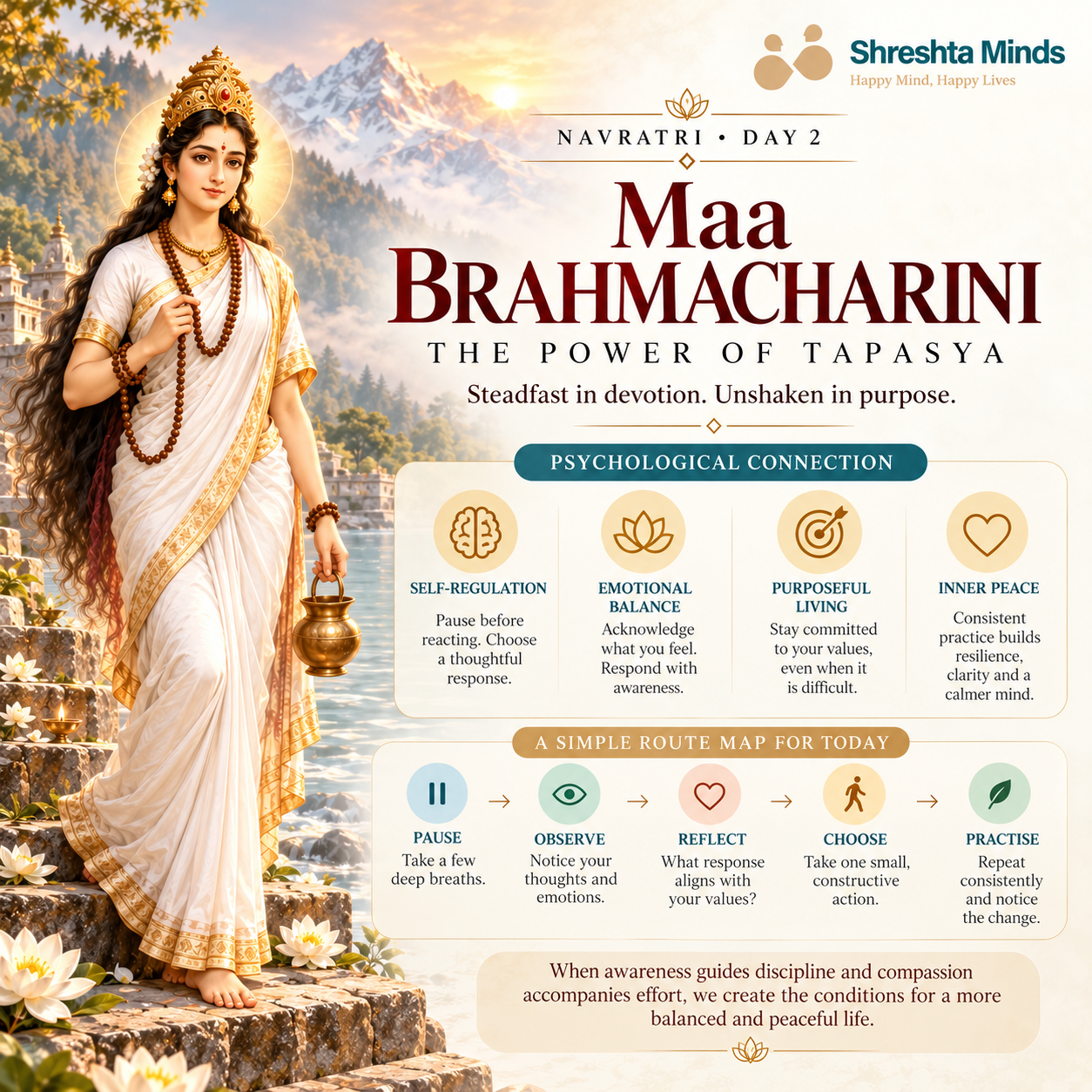
Maa Brahmacharini: The Psychology of Discipline, Emotional Balance and Inner Peace

“Maa Brahmacharini: Psychology of Inner Peace”

Navratri Day 2 | A Reflection on Spiritual Wisdom and Psychological Well-being

Why do we lose our peace even when we know what is right? Often, the challenge is not a lack of knowledge but the difficulty of practising patience, regulating emotions and remaining committed to our values.

The second day of Navratri, dedicated to Maa Brahmacharini, offers a meaningful opportunity to reflect on this human struggle.

Maa Brahmacharini symbolises tapasya—dedication, perseverance and spiritual discipline. Beyond its religious significance, this symbolism invites us to explore an important psychological principle: lasting personal growth requires consistent, conscious effort.

In psychology, self-regulation refers to the processes through which we manage our thoughts, emotions and behaviours in pursuit of meaningful goals. When anger arises, discipline helps us pause before reacting. The moment anxiety creates uncertainty, awareness helps us examine our thoughts. When motivation declines, commitment helps us continue taking constructive steps.

However, discipline should not be confused with suppressing emotions or demanding perfection from ourselves. Emotional balance begins when we acknowledge what we feel and choose how to respond.

Research says that mindfulness meditation programmes produced small to moderate improvements in anxiety and depressive symptoms, although evidence varied across outcomes and these practices were not shown to be superior to every active treatment.

The connection between Maa Brahmacharini’s symbolism and psychology lies in the practice of purposeful living.

Spiritual discipline encourages us to look beyond immediate impulses and reconnect with what truly matters. Psychological approaches similarly encourage thoughtful responses rather than automatic reactions.

Together, these perspectives invite us to develop patience without passivity, commitment without rigidity, and self-discipline without self-criticism.

A peaceful life does not mean a life without challenges. It means gradually developing the capacity to meet challenges with greater clarity, emotional awareness and compassion. A difficult conversation can become an opportunity to practise patience.

Personal setback can teach resilience. A moment of anger can remind us to pause, understand our feelings and respond constructively.

A simple practice for today: Spend five minutes in quiet reflection. Observe your breathing, identify the emotion that is most present, and ask yourself, “What response would reflect my values rather than my immediate impulse?” Choose one small action that expresses patience, kindness or responsibility, and practise it consciously.

The purpose is not to eliminate every uncomfortable thought or emotion, but to become more intentional in how we live.

Maa Brahmacharini’s spiritual message reminds us that meaningful transformation unfolds through perseverance and dedication.

Psychology helps us understand how consistent practice can support that journey. When awareness guides discipline and compassion accompanies effort, we create the conditions for a more balanced and peaceful life.

This Navratri, let tapasya become more than a ritual. Let it become a daily commitment to understanding ourselves, regulating our responses and living with purpose.

Rakesh Babu
Psychologist | Spiritual Teacher | Mental Wellness Advocate
www.shreshtaminds.com

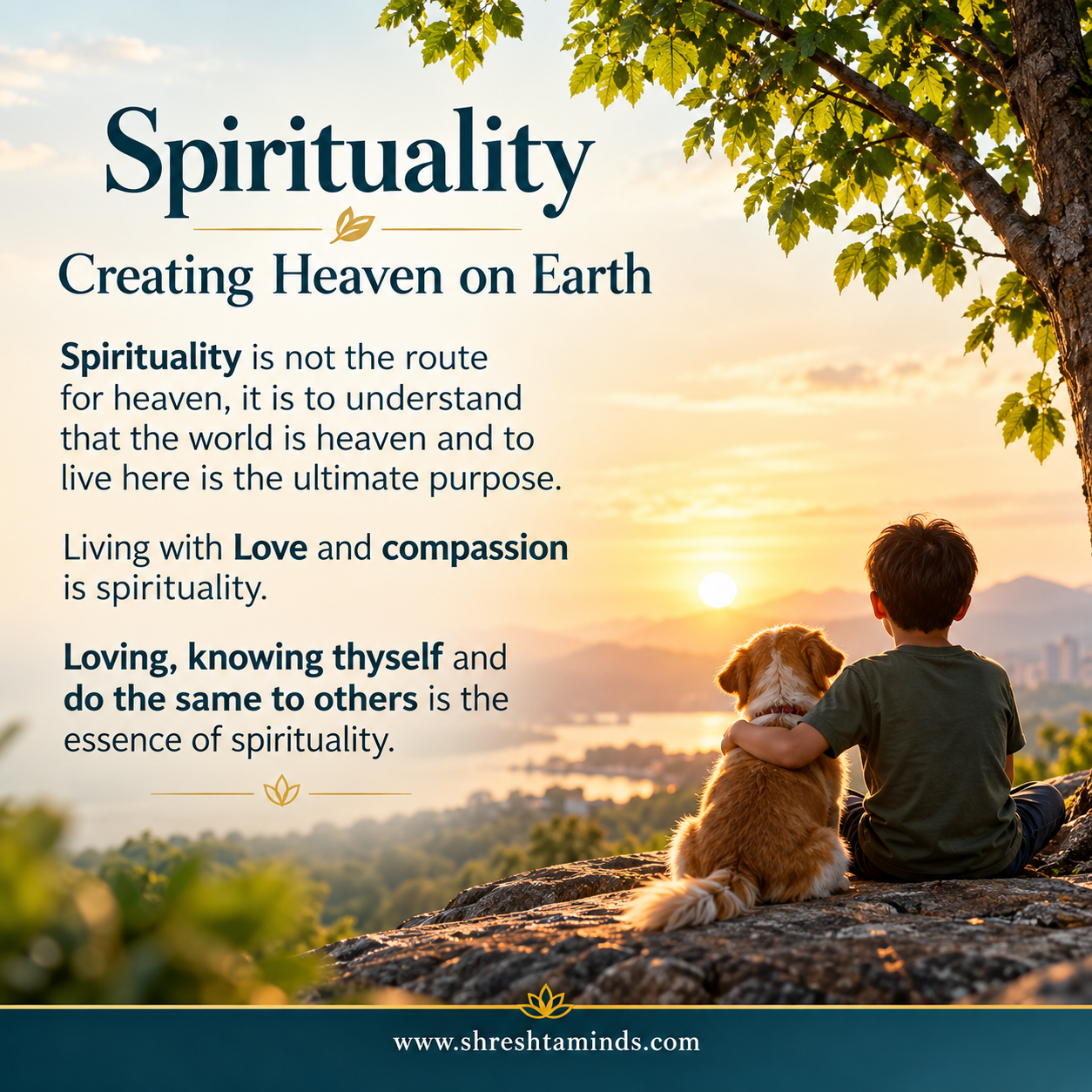
Spirituality: Creating Heaven on Earth

Spirituality and Love

What if heaven is not a destination we reach after death, but a reality we can experience while we are alive?

We often think spirituality is about reaching heaven, escaping the world, or searching for something beyond our understanding. But have we ever paused to ask ourselves whether we are missing the beauty of the very life we are living?

To me, spirituality is not about running away from the world; it is about learning how to live in it with love, compassion, and awareness.

What is the point of praying for peace when we cannot bring peace into our own homes? What is the value of worshipping the divine when we fail to recognise the humanity in the person standing beside us?

Spirituality begins when we stop looking only towards the sky and start looking into our own hearts.

It is the courage to understand ourselves, accept our imperfections, and grow beyond our ego. It is learning to love ourselves without becoming selfish and loving others without expecting anything in return.

When we begin to understand our own pain, we become more sensitive to the pain of others. When we learn to forgive ourselves, forgiveness becomes easier to offer to someone else. And when we discover kindness within us, we no longer need a reason to be kind to the world.

This is where spirituality moves beyond rituals, beliefs, and religious boundaries and becomes a way of life. It reflects in the way we speak to our parents, treat our children, respect strangers, and respond to those who disagree with us.

Spirituality is not measured merely by how many hours we spend in prayer, but also by how much love and understanding we bring into our everyday relationships.

The world may never become perfect, but our presence can make someone’s little corner of it more peaceful. A comforting word, a forgiving heart, a helping hand, or a moment of genuine understanding can transform an ordinary day into something beautiful.

Perhaps the ultimate purpose of life is not to find a way out of this world, but to discover how beautifully we can live within it. Know yourself. Love yourself. Extend that same love and understanding to others. In that simple truth lies the essence of spirituality.

Heaven may remain a mystery beyond this life, but we do not have to postpone love, compassion, and peace until then. We can begin creating heaven right here, right now.

In Love & Gratitude,

Rakesh Babu

Psychologist | www.shreshtaminds.com

“சேமிக்கிறோம்… வாழ்கிறோமா?”

நிகழ்காலத்தில் வாழ்வது முடியாத ஒன்று அல்ல.. அதற்கு ஒரு விதமான தைரியம் வேண்டும்!

கடைசி காலம் எதுவென்று தெரியாமலேயே, கடைசி காலத்திற்காக உழைக்கிறோம்…

நாளை நிம்மதியாக வாழ வேண்டும் என்ற எண்ணத்தில், இன்றைய நிம்மதியை பல நேரங்களில் தொலைத்து விடுகிறோம்.

எதிர்கால பாதுகாப்பிற்காக பணம் சேர்க்கிறோம்; ஆனால் அந்த பணத்தை அனுபவிக்க வேண்டிய நேரத்தை சேர்க்க மறந்து விடுகிறோம்.

குழந்தைகளின் எதிர்காலத்திற்காக ஓடுகிறோம்; ஆனால் அவர்களுடன் வாழ வேண்டிய நிகழ்காலத்தைத் தவறவிடுகிறோம்.

“ஓய்வு பெற்ற பிறகு பயணம் செய்வோம்… நேரம் கிடைத்த பிறகு நம்மை கவனிப்போம்…” என்று வாழ்க்கையை தொடர்ந்து ஒத்திவைக்கிறோம்.

உளவியல் ரீதியாக, இந்த “பின்னர் வாழலாம்” என்ற எண்ணம் நிகழ்காலத்தின் மதிப்பை மெதுவாகக் குறைத்து விடுகிறது.

எதிர்காலத்தைத் திட்டமிடுவது அவசியம். ஆனால் எதிர்காலத்திற்காக நிகழ்காலத்தையே முழுமையாக இழப்பது வாழ்க்கையின் நோக்கமாக இருக்க முடியாது.

சேமிப்பு வேண்டும்; அதே நேரத்தில் அனுபவமும் வேண்டும்.
பொறுப்பு வேண்டும்; அதே நேரத்தில் மனதிற்கான ஓய்வும் வேண்டும்.
வெற்றி வேண்டும்; ஆனால் அந்த வெற்றியை அனுபவிக்க முடியாத அளவுக்கு நம்மை சோர்வடையச் செய்துவிடக் கூடாது.

நாம் வாழப்போகும் ஆண்டுகளின் எண்ணிக்கையைவிட, அந்த ஆண்டுகளில் எவ்வளவு வாழ்க்கையை உணர்ந்தோம் என்பதே முக்கியம்.

நேற்றை மாற்ற முடியாது. நாளையை முழுமையாகக் கட்டுப்படுத்தவும் முடியாது. நம்மிடம் உண்மையாக இருப்பது இந்தக் கணம் மட்டுமே.

அன்பை வெளிப்படுத்த வேண்டுமென்றால் நாளை வரை காத்திருக்க வேண்டியதில்லை.
நன்றி சொல்ல வேண்டுமென்றால் சரியான தருணத்தைத் தேட வேண்டியதில்லை.
சந்திக்க வேண்டியவர்களைச் சந்தியுங்கள். பேச வேண்டிய வார்த்தைகளைப் பேசுங்கள்.

எதிர்காலத்திற்காக உழையுங்கள்; ஆனால் நிகழ்காலத்தை அடமானம் வைக்காதீர்கள்.

கடைசி காலம் எப்போது தொடங்கும் என்று நமக்குத் தெரியாது. ஆனால் இன்று நம்மிடம் இருக்கிறது என்பது மட்டும் நிச்சயம்.

எனவே, கடைசி காலத்திற்காக மட்டும் வாழாமல், கடைசி நாள் வந்தாலும்,

“நான் வாழ்ந்தேன்…”

என்று மனம் நிறைவுடன் சொல்லக்கூடிய வகையில் இன்றைய நாளையும் வாழ்வோம்.

நீங்கள் எதிர்காலத்திற்காக எதைச் சேமிக்கிறீர்கள்?
அதே நேரத்தில், இன்று எதற்காக வாழ்கிறீர்கள்?

சிந்தியுங்கள்.. சிந்தனை தெளிவுபடுத்தும்….


அன்புடன்,

ராகேஷ் பாபு | www.shreshtaminds.com

What If “Someday” Never Comes?

Living in the present is not impossible…It needs courage!

We work for a future we are not even sure we will reach.

Also, we tell ourselves, “One day, I will relax. I will travel one day. One day, I will spend more time with my family. One day, I will finally live the way I want.”

And in preparing for that “one day,” we quietly sacrifice today.

We:

— save money for the future, but sometimes forget to save time to enjoy what we have earned.

— work for our children’s future, yet miss the little moments of their childhood that can never return.

— postpone our dreams until retirement, without knowing what life, health, energy or circumstances will look like then.

From a psychological perspective, the habit of constantly saying “later” can make the present feel less valuable.

Planning for tomorrow is wisdom.

But sacrificing every today for an uncertain tomorrow is not necessarily wisdom.

We:

— need financial security, but we also need meaningful experiences.

— have responsibility, but we also need rest.

— need ambition, but we should not become so exhausted chasing success that we have no energy left to experience it.

— cannot change yesterday. We cannot completely control tomorrow.

All we truly have is this moment.

  • So express the love you feel.
  • Say the thank you.
  • Meet the people who matter.
  • Take that meaningful journey.
  • Create memories while you are still creating your future.

Work for tomorrow, but don’t mortgage today.

We don’t know when our “last phase” of life will begin.

But we do know that today is here.

So perhaps the goal is not merely to reach the end of life with everything accumulated…

but to reach it with the quiet satisfaction of being able to say:

“I didn’t just prepare for life.
I actually lived it.”

What are you saving for tomorrow—and what are you living for today?


In Love & Gratitude,

Rakesh Babu | Psychologist | www.shreshtaminds.com

Layers of Mind: The Invisible Architecture of Everyday Life

We often think we are living our lives through conscious choices, but much of everyday life is quietly shaped beneath awareness.

The Conscious Mind is where we think, decide, communicate and respond to what is happening right now.

The Pre-conscious Mind holds information and memories that can quickly come into awareness when we need them.

The subconscious mind quietly influences our habits, emotional reactions, preferences and automatic behaviours.

Deeper within, the unconscious mind may hold patterns and experiences that influence us without our immediate recognition.

And contemplative traditions point towards another possibility—the superconscious, where awareness moves beyond habitual thinking into deeper clarity and insight.

Imagine someone criticising you unexpectedly.

Your conscious mind hears the words, but another layer may immediately create an emotional reaction.

An old subconscious pattern may whisper, “I am being rejected again.”

The unconscious may carry the deeper story behind that feeling.

Yet there is something extraordinary about human awareness: we can observe the reaction instead of becoming the reaction.

That small space between stimulus and response is where conscious living begins.

Through reflection, mindfulness and inner observation, we gradually become aware of the architecture operating within us.

We begin to recognise that every reaction has a history, every habit has a pattern, and every pattern can potentially be understood.

Awareness does not mean fighting the deeper layers of the mind.

It means bringing what was automatic into the light of understanding.

When awareness grows, yesterday’s conditioning does not have to become tomorrow’s behaviour.

Perhaps personal growth is, therefore, not about changing who we are overnight but understanding what is operating within us, layer by layer.

The deeper we understand our mind, the more consciously we can design the life we live.

In Gratitude, Rakesh Babu | Psychologist | www.shreshtaminds.com