Meditation Helps in Brain Functions
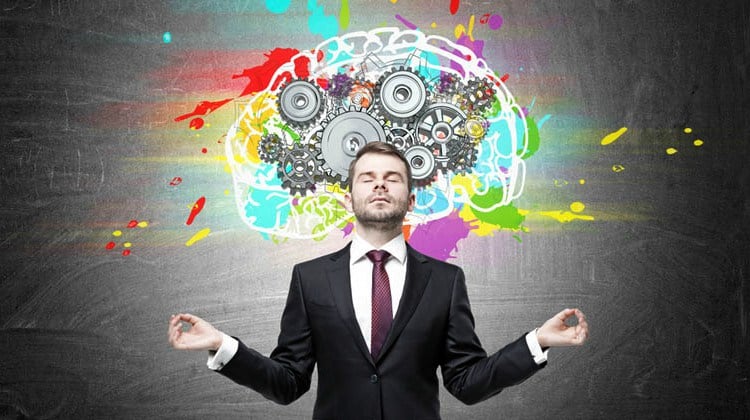
“Brilliant things happen in calm minds. Be calm. You’re brilliant.”
Hectic Deadlines, arguments, targets, inter-personal and intra-personal issues, social life imbalances, poor work-life balance, dealing with losses etc., creates more stress. Meditation has emerged as an antidote to ubiquitous stress. Meditation is a tool to calm down and help you relax and unwind in just a few minutes.
Approximately there are more than 3,000 scientific studies are done with meditation to prove scientifically that meditation helps our body and mind. The reasons to meditate can be physical, mental, emotional as well as spiritual.
Meditating for minimum 15 – 20 minutes daily for a few weeks brings transformation in our life. When we practice meditation regularly, it helps to:
- Improve your mental health Reduce anxiety
- A feel of personal growth
- Reduce depression
- Increase your peace of mind
- Lower levels of stress hormones
- Get a better quality of life
- May reduce blood pressure
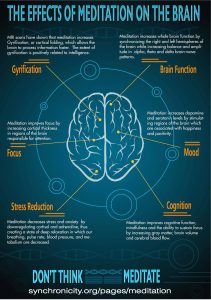 Effects Of Meditation On Brain:
- Meditation for Stress Reduction: Meditation helps to decrease the stress revel by regulating the cortisol and adrenaline. It develops a state of deep relaxation in which our breathing, pulse rate, blood pressure are balanced and can helps o bring down to normal rate. When you are stress, check out your pulse rate and breathing pattern, it would be abnormal. Thus, meditation helps in stress reduction.
- Meditation Improves Cognition: Meditation helps to improve cognitive function, mindfulness and to focus clearly by increasing the gray matter, brain volume and cerebral blood flow. It has been termed as a powerful fuel to increase your productivity. It also increases the blood flow to brain, it creates a strong network in cerebral cortex and reinforces the memory capacity.
- Meditation for Mood Stability: Meditation helps to increase the brain chemicals such as serotonin and dopamine levels by stimulating brain regions which are connected with positivity and happiness. Meditation decreases mood disturbances, anxiety and fatigue. It can also reduce the behavioral anxiety response in psychosocial stress.
- Meditation for Laser Sharp Focus: Meditation increases focus and concentration/attention span. By increasing the cortical thickness in the region of brain responsible for attention, focus gets improved. Researchers from Columbia University found that meditation can change the structure and functions of the brain.
- Meditation Increases Brain Function: It helps in synchronizing the right and left hemispheres of the brain while increasing balance and amplitude in alpha, theta and delta-wave patterns. Meditation can thicken the pre-frontal cortex. This helps in increased concentration, awareness, execution and decision making.
The above given points are very few to touch upon. However, meditation helps in larger extent for Brain and Mind. There are occasions where meditation can do adverse effect. Meditation can act as a stressor in vulnerable patients who may develop a transient psychosis with polymorphic symptomatology. In such cases, advice from the mental health practitioner helps to put things better. Clinically if it is advised not to meditate, then patients should listen to it.

Learn from the Master: It is good that one can start practicing meditation from a trained master under his supervision rather self-teaching. After a point of time when you practice it with more focus, you may not need the help of instructor. Meditation instructor will help you understand the nuances, science behind the meditation and can clear your doubts if any you have.
Disclaimer: The image has taken from synchronicity website as they have posted it as free image for sharing. Credits to the original creator.
In Gratitude,
N.R.Rakesh Babu
Psychologist | Doctoral Researcher
www.rakeshbabu.com | www.rbac.in

 Zigs – Zags will be there. However, if we decide to make it enjoyable, then the journey will be #fun. If we feel it as trouble, then we may end up in worries.