Hypothalamus & Body’s Stress Response!
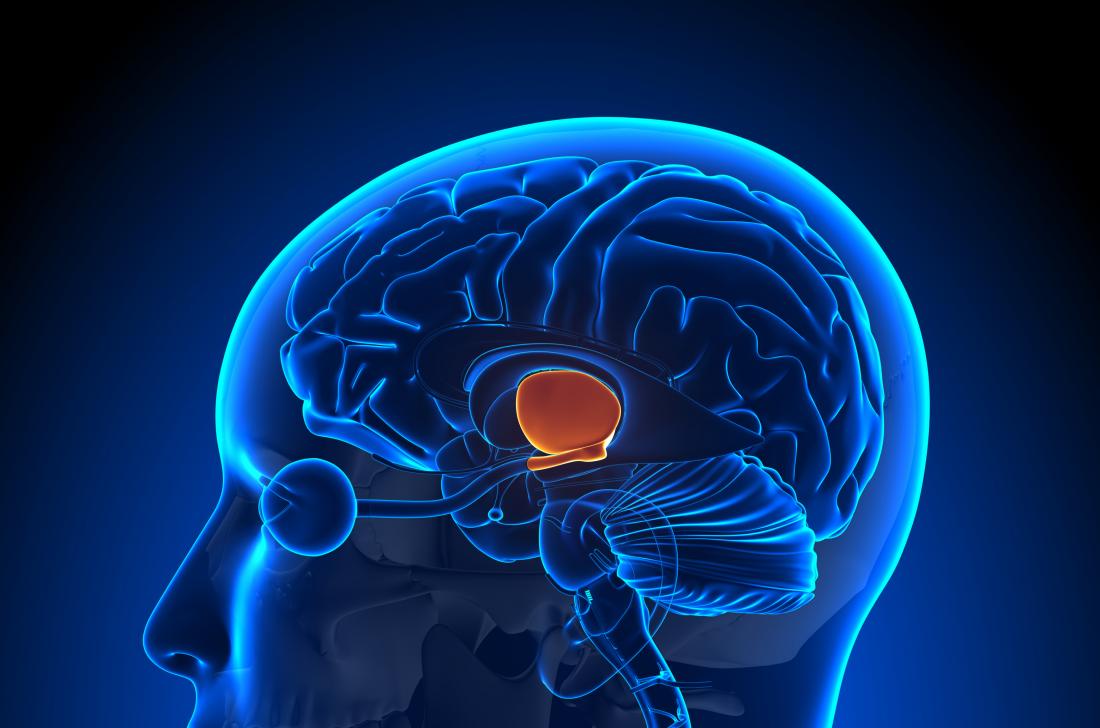
Learning little knowledge about Brain and Mind connection helps us to live healthily and happily!
Hypothalamus:
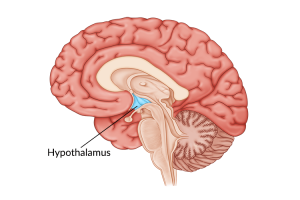
It is a structure deep in your brain, acts as your body’s smart control coordinating center. Its main function is to keep your body in a stable state called homeostasis. It’s the main link between your endocrine system and your nervous system.
It is and almond sized and is located below the thalamus and above your pituitary gland. It is located just above the brain stem at the base of your brain.
Main Functions of Hypothalamus are:
- Releasing hormones.
- Maintaining daily physiological cycles.
- Controlling appetite.
- Managing sexual behavior.
- Regulating emotional responses.
- Regulating body temperature.
Hypothalamus & Body’s Stress Response:
Cortisol is an essential hormone that affects almost every organ and tissue in your body. Regulating your body’s stress response is Cortisol’s main function.
When a person is in stress, the heart-rate increases, immune system slows down and in fact the digestive system will be altered.
Upon stress, the hypothalamus releases a hormone that travels to your pituitary gland, which then tells your adrenal glands to release cortisol. However, when the stressful situation gets normal, your cortisol levels up and body’s functions will become normal.
It helps in controlling body metabolism & reduce inflammation.
Cortisol can seriously hurt your body whether it is little or much, so the hypothalamus carefully regulates the amount circulating. If a person has chronic stress, the hypothalamus and the rest of the system is activated more often than it should be.
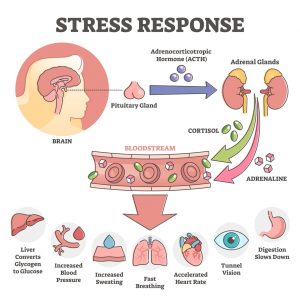
When the body has so much cortisol from chronic stress, it gets used to these high levels. So when you have a stressful situation later, your hypothalamus has to release more cortisol to get an appropriate stress response. This leads to a cycle where your body has to keep releasing more cortisol after every stressful event, which can cause other health issues including anxiety, digestive problems, depression, heart disease, and more fun things literally no one wants.
How to balance Cortisol – For Stress Free & Happy Life?
- Aim to reduce stress – Breathe well, Exercise, Engage with your interested hobbies.
- Good Diet – Fruits (bananas), Probiotic food, fibrous food etc.,
- Enough Rest – Sleep well, lower down screen time.
- Relaxation Techniques – Meditation, breathing exercises.
- Have Fun – Be with people who can make you smile and laugh, go out.
- No Caffeine at Night – Caffeine can interfere with a good night’s sleep.
Other Hypothalamus Releasing Hormones & it’s Effects.
Primary hormones secreted by the hypothalamus include:
- Anti-diuretic hormone (ADH): This hormone increases water absorption into the blood by the kidneys.
- **Corticotropin-releasing hormone (CRH):** CRH sends a message to the anterior pituitary gland to stimulate the adrenal glands to release corticosteroids, which help regulate metabolism and immune response.
- Gonadotropin-releasing hormone (GnRH): GnRH stimulates the anterior pituitary to release follicle stimulating hormone (FSH) and luteinizing hormone (LH), which work together to ensure normal functioning of the ovaries and testes.
- Growth hormone-releasing hormone (GHRH) or growth hormone-inhibiting hormone (GHIH) (also known as somatostain): GHRH prompts the anterior pituitary to release growth hormone (GH); GHIH has the opposite effect. In children, GH is essential to maintaining a healthy body composition. In adults, it aids healthy bone and muscle mass and affects fat distribution.
- Oxytocin: Oxytocin is involved in a variety of processes, such as orgasm, the ability to trust, body temperature, sleep cycles, and the release of breast milk.
- Prolactin-releasing hormone (PRH) or prolactin-inhibiting hormone (PIH) (also known as dopamine): PRH prompts the anterior pituitary to stimulate breast milk production through the production of prolactin. Conversely, PIH inhibits prolactin, and thereby, milk production. **Thyrotropin releasing hormone (TRH):** TRH triggers the release of thyroid stimulating hormone (TSH), which stimulates release of thyroid hormones, which regulate metabolism, energy, and growth and development.
Let’s know more about brain; stay healthy and stress free.
Disclaimer: The images are taken from different sources of website. Factual information has taken from wikipedia and trusted sources in website. All credits goes to the original creators. This article is posted only with the intention of knowledge sharing.
In Gratitude,
N.R.Rakesh Babu
Psychologist | Doctoral Researcher
www.rakeshbabu.com | www.rbac.in
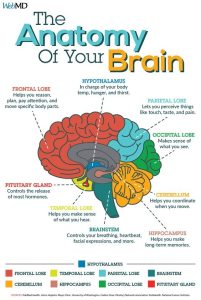 The brain is a complex organ that controls thought, memory, emotion, touch, motor skills, vision, breathing, temperature, hunger and every process that regulates our body. Together, the brain and spinal cord that extends from it make up the central nervous system.