Metacognitive Skills For Better Results

Metacognition has been defined as “one’s knowledge concerning one’s own cognitive processes or anything related to them” (Flavell, 1976, in Kaplan et al., 2013) and is commonly referred to as “thinking about one’s thinking”. Having well-developed metacognitive thinking skills is associated with improved learning.
Knowledge of Cognition & Regulation of Cognition:
For example, Consider, you are thinking about writing an article today with an interesting topic, now you think about what to write, where to take reference, how it will impact your readers, what are the significance in your writing or what are the strategies that you plan to write it effectively. However, thinking about what you thought to write is Metacognition.
According to metacognitive theories, metacognition includes two domains: knowledge of cognition and regulation of cognition (Schraw & Moshman, 1995).
Knowledge of cognition includes knowledge about oneself as a learner, knowledge about learning strategies, and knowledge about why and when to use a given strategy.
Regulation of cognition includes the ability to plan, monitor, regulate and evaluate your learning process.
Easy THREE Steps of Regulation of Cognition:
#Planning:
- What is the nature of the task?
- What is my goal?
- What kind of information and strategies do I need?
- How much time and resources will I need?
#Monitoring:
- Do I have a clear understanding of what I am doing?
- Does the task make sense?
- Am I reaching my goals?
- Do I need to make changes?
#Evaluating:
- Have I reached my goal?
- What worked?
- What didn’t work?
- Would I do things differently next time?
Few Metacognitive Strategies in Learning are as Follows:
- Identifying one’s own style of learning and the needs associated with it.
- Planning for task
- Collecting and organizing the materials
- Arranging learning space and schedules
- Monitor mistakes
- Evaluate the mistakes happened and task
- Evaluate the success of any learning strategy and adjusting
The above information are basic theories about Metacognition. The attached infographic is really good to understand the easy ways to develop the Metacognitive Skills.
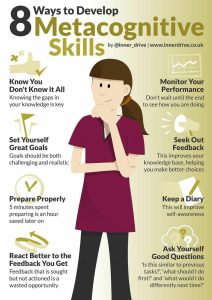
EASY WAYS TO DEVELOP METACOGNITIVE SKILLS:
- Know that you don’t know everything
- Set GOALS
- Introspection (or) Keep Questioning Yourself
- Prepare Promptly
- Monitor or Measure Your Progress
- Get Honest Feedback
- Journal or Keep a Diary
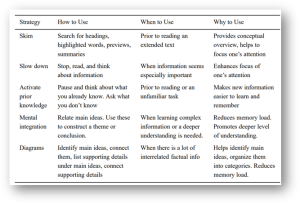
Below Table Helps to Develop Metacognitive Skills in General!
Disclaimer: Extending my sincere gratitude to image creators and source of details.
In Gratitude,
N.R.Rakesh Babu
Psychologist | Doctoral Researcher
www.rakeshbabu.com | www.rbac.in

Leave a Reply