Do You Follow Your CLock?
Healthy Morning to everyone!
Do we really follow the rythm of our body? Most times, we don’t listen to the rythm with which our body operates.
Haven’t you observed your body at different hours in a day? Sometimes you will be energetic, sometimes you will be lazy. Assertiveness and aggressiveness can be felt while taking decisions at different timings in a day. On some odd days, the perception, judgement, choices in decision making, some of our emotions and behaviors also get distorted.
These things can happen due to many reasons. One of those is because, of the imbalance & non-synchronized lifestyle managements. To live a balanced life—and enjoy the good health it brings—we need to keep our daily rhythms set to the age-old ayurvedic clock.
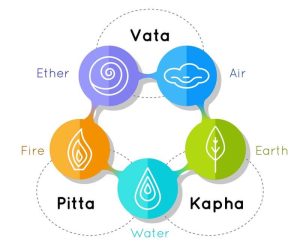
Let’s learn simple things about Ayurveda for BETTER HEALTH & Peak Productivity Performance:
Vata, Pita & Kapha are the three Doshas of the body. Perfect balance of three Doshas leads to health, imbalance in Tridosha leads to diseases. “Dosha” is a central term in Ayurveda originating from Sanskrit, which can be translated as “that which can cause problems” (literally meaning “fault” or “defect”), and which refers to three categories or types of substances that are believed to be present in a person’s body and mind.
Normally, we break our day into THREE – Work Time | Our Time | Sleep Time. However,
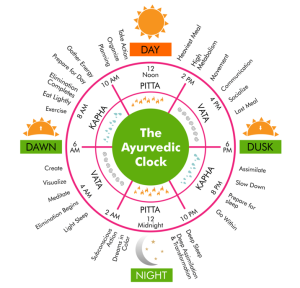
Ayurveda breaks a day into SIX Four-Hour Zones.
Day Starts: 6:00 a.m. to 10:00 a.m. – Kapha Time – Cool, Heavy & Earthy
Mid Day: 10:00 a.m. to 02:00 p.m. – Pitta Time – Hot, Sharp and fiery “High Digestive time”
Afternoon: 02:00 p.m. to 06:00 p.m. – Vata Time – Light, Dry & Airy
Then, the cycle continues: 06:00 p.m. to 10:00 p.m. – Kapha | 10:00 p.m. to 02:00 a.m. – Pitta | 02:00 a.m. to 06:00 a.m. – Vata.
To put it simple:
- The rising (dawn) and falling (dusk) of the sun are connected to “Kapha”.
- The peak of the day (midday) and the peak of the night (midnight) are related to “Pitta”.
- The transition between night and day and between dusk and dawn is related to “Vata”.
Activities for Vata time: Vata dosha includes the elements of ether and air. This time is the best time to access the ether and spiritual connections (for those who believe in it), others can be with the nature.
02:00 a.m. – 06:00 a.m. | Cool, Heavy & Earthy
- Body prepares to wake up and gets ready for elimination. | In India, we term “Brahma muhurta”, 96 minutes before sunrise, is the best time to wake up. Brahma means knowledge and this is the time to seek knowledge.
- This is the auspicious and sacred time, the best time to meditate, visualize, and create.
- It is also the ideal time to go out for a walk and do yoga.
02:00 p.m. – 06:00 p.m. | Light, Dry & Airy
Best time for communicating, socializing, and sharing creativity. At Dusk, practice Meditation & lighter exercises. | It is best to have the last meal before 6:00 p.m.
Activities for Pitta time: Pitta dosha includes the fire and water elements. Hence, the most productive part of the day.
10:00 a.m. – 02:00 p.m. | Hot, Sharp and fiery “High Digestive time”
Ayurveda also encourages us to eat our primary meal in the middle of the day, when the fire of pitta dominates. Pitta supports our ability to digest all things—food, thoughts, and feelings.
- Pitta time is for planning, taking action, and organizing.
- Plan and execute your most physical or analytical tasks during the Pitta day hours.
10:00 p.m. – 2:00 a.m. | Resist The Second Spell
- Let’s allow body to repair itself. Hitting the bed before 10 p.m. helps the hormones such as serotonin and melatonin to do their tasks in our body. Best time when our mind is in a subconscious state, and when we experience colorful dreams.
Activities for Kapha time: Kapha dosha comprises earth and water elements. The nature is heavy and nourishment & It is a perfect time for self-care rituals.
06:00 a.m. – 10:00 a.m. | Blissful Morning
- Rise up in the Kapha hours so as to draw prana (life force) into the body.
- Morning ablutions including full elimination should happen.
- Practice Exercises or Yoga.
- Break the Fast and get energetic and prepare for your day.
06:00 p.m. – 10:00 p.m. | Winds Down Slowly
- Slow down and assimilate your energy.
- Be with loved ones.
- If possible, a warm oil massage (Abhyanga) also adds to a feeling of heaviness that will relax your body and senses, and help you achieve deep rest.
- IMPORTANTLY: Turn off your screens and get ready to hit the bed. No activities that can go deep into your mind to disturb your sleep.
Knowledge of this Ayurvedic routine has been around for thousands of years and it has been passed down through the sciences of yoga and Ayurveda. However, our modern lifestyle has made it difficult for us to comply with natural rhythms.
These rhythms are not rules invented by Ayurveda, they are the basic needs of our body and mind. By understanding your dosha and how it functions, you can better understand how the energy around you affects your constitution and inner being.
Let’s live healthily! Wishing you all good health, peace and prosperity!
In Gratitude – N.R.Rakesh Babu | Psychologist | PhD Research Scholar

Leave a Reply