
Archives 2026

Spirituality: Creating Heaven on Earth

Spirituality and Love

What if heaven is not a destination we reach after death, but a reality we can experience while we are alive?

We often think spirituality is about reaching heaven, escaping the world, or searching for something beyond our understanding. But have we ever paused to ask ourselves whether we are missing the beauty of the very life we are living?

To me, spirituality is not about running away from the world; it is about learning how to live in it with love, compassion, and awareness.

What is the point of praying for peace when we cannot bring peace into our own homes? What is the value of worshipping the divine when we fail to recognise the humanity in the person standing beside us?

Spirituality begins when we stop looking only towards the sky and start looking into our own hearts.

It is the courage to understand ourselves, accept our imperfections, and grow beyond our ego. It is learning to love ourselves without becoming selfish and loving others without expecting anything in return.

When we begin to understand our own pain, we become more sensitive to the pain of others. When we learn to forgive ourselves, forgiveness becomes easier to offer to someone else. And when we discover kindness within us, we no longer need a reason to be kind to the world.

This is where spirituality moves beyond rituals, beliefs, and religious boundaries and becomes a way of life. It reflects in the way we speak to our parents, treat our children, respect strangers, and respond to those who disagree with us.

Spirituality is not measured merely by how many hours we spend in prayer, but also by how much love and understanding we bring into our everyday relationships.

The world may never become perfect, but our presence can make someone’s little corner of it more peaceful. A comforting word, a forgiving heart, a helping hand, or a moment of genuine understanding can transform an ordinary day into something beautiful.

Perhaps the ultimate purpose of life is not to find a way out of this world, but to discover how beautifully we can live within it. Know yourself. Love yourself. Extend that same love and understanding to others. In that simple truth lies the essence of spirituality.

Heaven may remain a mystery beyond this life, but we do not have to postpone love, compassion, and peace until then. We can begin creating heaven right here, right now.

In Love & Gratitude,

Rakesh Babu

Psychologist | www.shreshtaminds.com

“சேமிக்கிறோம்… வாழ்கிறோமா?”

நிகழ்காலத்தில் வாழ்வது முடியாத ஒன்று அல்ல.. அதற்கு ஒரு விதமான தைரியம் வேண்டும்!

கடைசி காலம் எதுவென்று தெரியாமலேயே, கடைசி காலத்திற்காக உழைக்கிறோம்…

நாளை நிம்மதியாக வாழ வேண்டும் என்ற எண்ணத்தில், இன்றைய நிம்மதியை பல நேரங்களில் தொலைத்து விடுகிறோம்.

எதிர்கால பாதுகாப்பிற்காக பணம் சேர்க்கிறோம்; ஆனால் அந்த பணத்தை அனுபவிக்க வேண்டிய நேரத்தை சேர்க்க மறந்து விடுகிறோம்.

குழந்தைகளின் எதிர்காலத்திற்காக ஓடுகிறோம்; ஆனால் அவர்களுடன் வாழ வேண்டிய நிகழ்காலத்தைத் தவறவிடுகிறோம்.

“ஓய்வு பெற்ற பிறகு பயணம் செய்வோம்… நேரம் கிடைத்த பிறகு நம்மை கவனிப்போம்…” என்று வாழ்க்கையை தொடர்ந்து ஒத்திவைக்கிறோம்.

உளவியல் ரீதியாக, இந்த “பின்னர் வாழலாம்” என்ற எண்ணம் நிகழ்காலத்தின் மதிப்பை மெதுவாகக் குறைத்து விடுகிறது.

எதிர்காலத்தைத் திட்டமிடுவது அவசியம். ஆனால் எதிர்காலத்திற்காக நிகழ்காலத்தையே முழுமையாக இழப்பது வாழ்க்கையின் நோக்கமாக இருக்க முடியாது.

சேமிப்பு வேண்டும்; அதே நேரத்தில் அனுபவமும் வேண்டும்.
பொறுப்பு வேண்டும்; அதே நேரத்தில் மனதிற்கான ஓய்வும் வேண்டும்.
வெற்றி வேண்டும்; ஆனால் அந்த வெற்றியை அனுபவிக்க முடியாத அளவுக்கு நம்மை சோர்வடையச் செய்துவிடக் கூடாது.

நாம் வாழப்போகும் ஆண்டுகளின் எண்ணிக்கையைவிட, அந்த ஆண்டுகளில் எவ்வளவு வாழ்க்கையை உணர்ந்தோம் என்பதே முக்கியம்.

நேற்றை மாற்ற முடியாது. நாளையை முழுமையாகக் கட்டுப்படுத்தவும் முடியாது. நம்மிடம் உண்மையாக இருப்பது இந்தக் கணம் மட்டுமே.

அன்பை வெளிப்படுத்த வேண்டுமென்றால் நாளை வரை காத்திருக்க வேண்டியதில்லை.
நன்றி சொல்ல வேண்டுமென்றால் சரியான தருணத்தைத் தேட வேண்டியதில்லை.
சந்திக்க வேண்டியவர்களைச் சந்தியுங்கள். பேச வேண்டிய வார்த்தைகளைப் பேசுங்கள்.

எதிர்காலத்திற்காக உழையுங்கள்; ஆனால் நிகழ்காலத்தை அடமானம் வைக்காதீர்கள்.

கடைசி காலம் எப்போது தொடங்கும் என்று நமக்குத் தெரியாது. ஆனால் இன்று நம்மிடம் இருக்கிறது என்பது மட்டும் நிச்சயம்.

எனவே, கடைசி காலத்திற்காக மட்டும் வாழாமல், கடைசி நாள் வந்தாலும்,

“நான் வாழ்ந்தேன்…”

என்று மனம் நிறைவுடன் சொல்லக்கூடிய வகையில் இன்றைய நாளையும் வாழ்வோம்.

நீங்கள் எதிர்காலத்திற்காக எதைச் சேமிக்கிறீர்கள்?
அதே நேரத்தில், இன்று எதற்காக வாழ்கிறீர்கள்?

சிந்தியுங்கள்.. சிந்தனை தெளிவுபடுத்தும்….


அன்புடன்,

ராகேஷ் பாபு | www.shreshtaminds.com

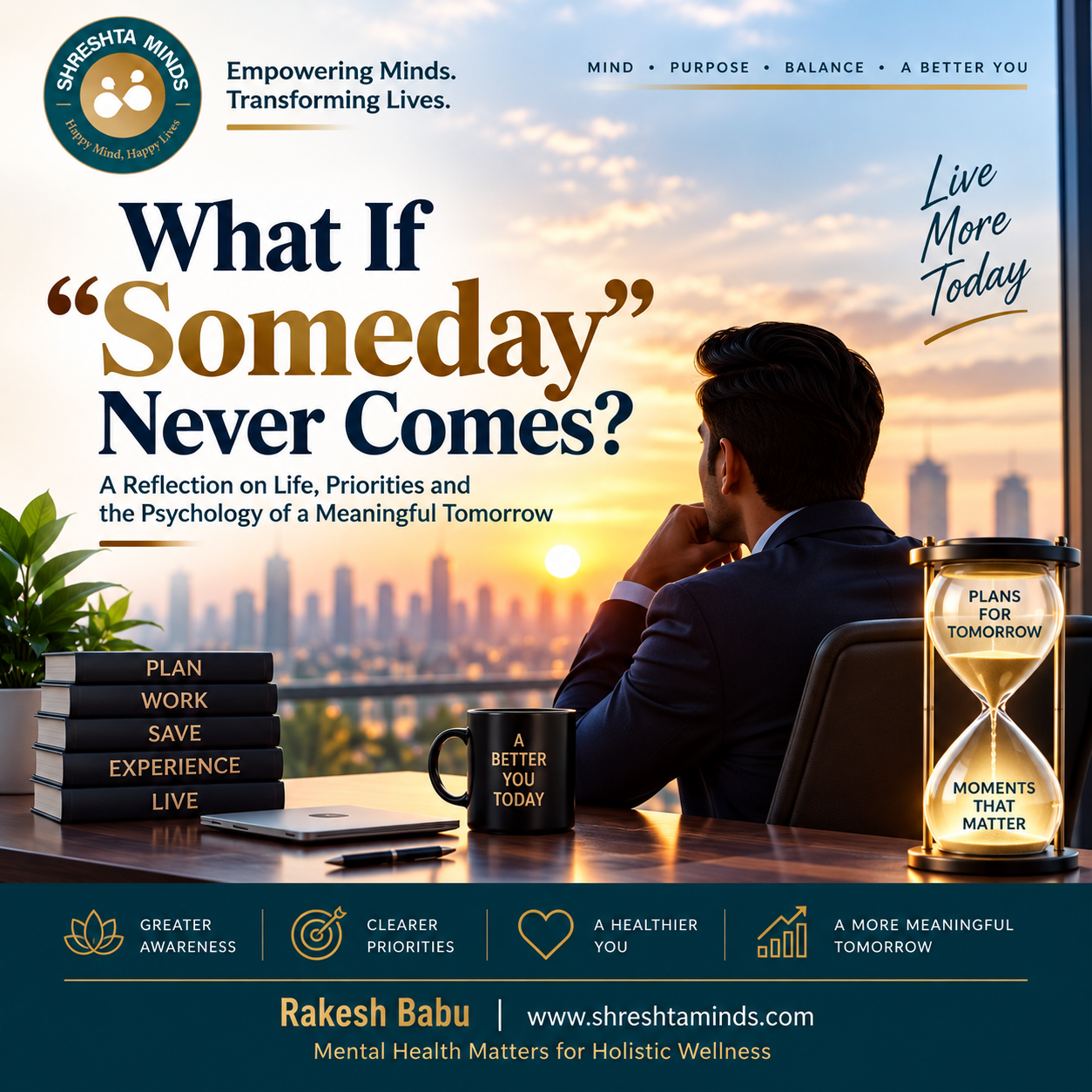
What If “Someday” Never Comes?

Living in the present is not impossible…It needs courage!

We work for a future we are not even sure we will reach.

Also, we tell ourselves, “One day, I will relax. I will travel one day. One day, I will spend more time with my family. One day, I will finally live the way I want.”

And in preparing for that “one day,” we quietly sacrifice today.

We:

— save money for the future, but sometimes forget to save time to enjoy what we have earned.

— work for our children’s future, yet miss the little moments of their childhood that can never return.

— postpone our dreams until retirement, without knowing what life, health, energy or circumstances will look like then.

From a psychological perspective, the habit of constantly saying “later” can make the present feel less valuable.

Planning for tomorrow is wisdom.

But sacrificing every today for an uncertain tomorrow is not necessarily wisdom.

We:

— need financial security, but we also need meaningful experiences.

— have responsibility, but we also need rest.

— need ambition, but we should not become so exhausted chasing success that we have no energy left to experience it.

— cannot change yesterday. We cannot completely control tomorrow.

All we truly have is this moment.

  • So express the love you feel.
  • Say the thank you.
  • Meet the people who matter.
  • Take that meaningful journey.
  • Create memories while you are still creating your future.

Work for tomorrow, but don’t mortgage today.

We don’t know when our “last phase” of life will begin.

But we do know that today is here.

So perhaps the goal is not merely to reach the end of life with everything accumulated…

but to reach it with the quiet satisfaction of being able to say:

“I didn’t just prepare for life.
I actually lived it.”

What are you saving for tomorrow—and what are you living for today?


In Love & Gratitude,

Rakesh Babu | Psychologist | www.shreshtaminds.com

Your Brain Is Learning Even When You Are Not Trying to Learn

How do learning and neuroplasticity connect?

We usually think learning happens when we read, study, practice, or consciously try to acquire something new.

But your brain is learning far more than you realize, even when you are not trying to learn.

Every thought you repeat, every response you practice, and every behavior you experience repeatedly leaves an impression on the brain.

This is one of the fascinating realities of neuroplasticity—the brain has the ability to adapt based on experience.

And that means learning is not only about what you intentionally teach yourself.

You may be teaching your brain patience every time you pause before reacting or avoidance every time you repeatedly escape what feels difficult.

You may be building curiosity every time you explore something unfamiliar or rigidity when you repeatedly resist anything that challenges your existing way of thinking.

In other words, everyday life itself can become a training ground for the brain.

This makes learning much bigger than education, because learning can gradually become capacity building.

The more you practice a way of thinking or responding, the more available that capacity may become when you need it.

And when a capacity can be consistently brought into action, it begins to express itself as capability.

Perhaps this is why knowing something does not always mean we can actually do it.

The brain does not simply need information; it needs experience, practice, repetition, and meaningful engagement.

So instead of asking only, “What did I learn today? “Perhaps we should sometimes ask, “What capacity did I build today?”

Because whether we realize it or not, our everyday experiences are constantly shaping what our brain becomes better prepared to do.

And that leaves us with a fascinating question: If your brain is learning every day, what are you teaching it to become?


Enjoying the articles? Leave your comment!

In Love & Gratitude,

Rakesh Babu | Psychologist | www.shreshtaminds.com

Radha & Dhara: The Direction of the Mind

Self-awareness in Decision Making!

Dhara represents the outward flow—the mind constantly moving toward people, problems, possessions, information and expectations.

Our attention naturally flows outward, responding to everything happening around us.

But there is another movement: Radha—the symbolic journey of returning toward the source within.

Psychologically, this can be understood as the ability to pause and observe what is happening inside us.

Before reacting to a situation, we can notice our thoughts, emotions, assumptions and impulses.

That small inward movement can create something powerful: awareness.

In the workplace, this becomes especially important when pressure, conflict or uncertainty demands an immediate response.

A reactive mind flows directly from stimulus to behavior.

A conscious mind creates a space between what happens and how it chooses to respond.

That space is where emotional regulation, reflection, and better decision-making begin.

A leader who can return inward is less likely to be controlled by every external disturbance.

The same principle applies to careers, relationships, and everyday choices.

The objective is not to stop the outward flow of life.

It is to learn the rhythm of moving outward, returning inward, and moving outward again with greater clarity.

Dhara → Radha → Dhara.

Experience → Awareness → Response.

Perhaps growth is not about controlling the world outside us.

Perhaps it begins with learning when to return to the world within us.


Enjoying it? Comment your thoughts.

In Love & Gratitude,

Rakesh Babu | Psychologist | www.shreshtaminds.com

The 5-Minute Rule That Gets You Moving

How to stop procrastinating!

You know what needs to be done.

You even know how important it is.
Yet somehow, you keep saying, “I’ll do it later.”

The problem is rarely the task; it is the resistance before starting.

So stop telling yourself, “I have to finish this.”

Tell yourself, “I only have to start for five minutes.”

Open the document.
Write the first sentence.
Make the first call.
Clean one corner.
Read one page.
Walk for five minutes.

Once you begin, the brain often finds it easier to continue.

If you feel like stopping after five minutes, you can stop without guilt.
But most of the time, starting breaks the invisible wall.

Don’t wait for motivation to arrive before you act.

Action often creates the motivation you were waiting for.

Tomorrow is attractive because it asks nothing from you today.

But your future is built from what you are willing to begin now.

So don’t aim to finish everything today.

Instead of thinking how to stop procrastinating, begin something now and see the results.

Just give yourself five minutes to begin.


In Love & Gratitude

Rakesh Babu | Psychologist | www.shreshtaminds.com

When One Impression Colours the Whole Person

First Impression Bias

Have you ever liked someone almost instantly because of the way they spoke, carried themselves, or presented themselves?

It happens to all of us.

Our minds are constantly trying to make sense of people, and sometimes one noticeable quality becomes the basis for everything else we think about them.

A confident person may appear more capable. A well-dressed person may seem more successful. A charismatic leader may immediately appear more competent.

But do we really know that?

Not necessarily. We may simply be allowing one positive quality to influence our judgement of qualities we haven’t actually observed.

This can quietly affect important decisions—whom we hire, whom we trust, whom we admire, and even whom we choose to build relationships with.

The interesting thing is that we usually don’t realise it is happening. We genuinely feel that we are judging the person objectively.

The same thing can happen in the opposite direction. One unpleasant experience or negative characteristic can make us see the entire person negatively.

But people are rarely that simple.

Someone can be confident but not competent. Someone can be charming but not trustworthy. And someone who is quiet or reserved may have exceptional abilities that simply aren’t visible at first.

This is why a first impression should be a starting point, not a final conclusion.

Perhaps, before judging someone, we should pause and ask ourselves: “What do I actually know about this person, and what am I simply assuming?”

That small pause can make our judgements fairer, our decisions wiser, and our relationships more genuine.

Because sometimes, the person we think we see is only the person our mind has created from one small part of the picture.

Look beyond the first impression. See the whole person.


In Love & Gratitude, Rakesh Babu

Psychologist | www.shreshtaminds.com
WHEN LESS BECOMES MEDICINE

Fasting Beyond Food……..

Langhanam Parama Aushadham — sometimes, emptiness itself becomes the medicine.

When the stomach is overloaded, a little fasting can give the body space to heal.

Perhaps the same wisdom applies to the mind, heart and life.

Emotional Fasting — sometimes, stop reacting, explaining, defending and carrying everything personally.

Social Fasting — step away from people occasionally, not because you dislike them, but because you need to hear yourself again.

Digital Fasting — disconnect from the endless stream of notifications, opinions and comparisons.

Mental Fasting — give your mind permission to stop consuming information and simply be still.

Financial Fasting — pause unnecessary buying and discover how much of what we want is actually unnecessary.

Fasting from Negativity — stop feeding your mind with gossip, outrage, fear and conversations that leave you smaller.

Fasting from Productivity — remember that a human being is not a machine that must constantly produce to deserve rest.

Because life can become unhealthy not only from what we lack, but also from what we consume excessively.

Sometimes, the most powerful thing you can add to your life is space.

Space to breathe. Space to think. Space to feel. Space to heal.

Perhaps Langhanam Parama Aushadham is not merely about fasting from food.

It is a reminder that sometimes, healing begins when we stop taking in—and start letting go.


In Love & Gratitude, Rakesh Babu | Psychologist | www.shreshtaminds.com 

The Architecture of Overthinking

How to stop overthinking!

Have you ever noticed how one small thought can become a full-blown story in your mind?

A message goes unanswered.
The conversation feels slightly different.
Decision keeps replaying in your head.

And suddenly, your mind is running through possibilities that haven’t even happened.

That is the architecture of overthinking. The interesting part is—you don’t have to silence your mind.

You have to understand how the pattern is built.

Overthinking rarely begins with a big problem; it often begins with a single thought.

Something happens, and the mind immediately starts searching for meaning.

We interpret the event through our beliefs, experiences, fears, and expectations.

That interpretation creates an emotional response.

The emotion then makes the original thought feel even more important.

So, we revisit it—again and again—hoping that repetition will give us certainty.

But repetition doesn’t always create clarity; sometimes, it creates amplification.

A small possibility becomes a probable outcome, and a probable outcome becomes a frightening certainty.

This is where overthinking begins to feel like problem-solving.

Yet thinking more does not necessarily mean thinking better.

The turning point comes when we develop awareness of the pattern.

Awareness creates a small but powerful pause between the thought and our reaction.

Inside that pause lies something we often forget: choice.

We may not control every thought that enters our mind, but we can influence what we do with it.

Questioning the thought instead of automatically believing it.

We can separate facts from assumptions, possibilities from probabilities, and fears from reality.

“Choose a response instead of endlessly rehearsing the problem.”

That is how the journey moves from overthinking to awareness, from awareness to clarity, and from clarity to action.

A calmer mind isn’t a mind without thoughts; it is a mind that doesn’t have to obey every thought.

Think. Pause. Question. Choose. Act. — Better Thinking. Better Decisions. Better Outcomes.


In Love & Gratitude, Rakesh Babu | Psychologist | www.shreshtaminds.com 

When the Mind Rises: 10 Metaphors for an Elevated Mood

What if your mood could feel like sunlight entering a room after a long night?

An elevated mood is more than just being happy—it is that subtle shift within us when the mind feels lighter, thoughts become brighter, and life suddenly seems a little more possible.

🌤️ Elevated Mood — 10 Metaphors

  1. A Window Opening After Rain The mind feels fresh, clear, and ready to welcome the world again.

  2. Sunlight Entering a Quiet Room Positive energy gently fills spaces that once felt dull.

  3. A Bird Finding Its Wings The mind feels lighter, freer, and more capable of moving forward.

  4. A River Flowing Without Rocks Thoughts and emotions move smoothly without unnecessary resistance.

  5. A Lamp Burning Brighter Inner energy increases, making everything around you feel more hopeful.

  6. Clouds Making Way for the Sky Heavy emotions begin to fade, revealing a clearer emotional space.

  7. A Garden Suddenly in Bloom Joy, enthusiasm, and emotional warmth begin appearing naturally.

  8. A Song Finding Its Rhythm Your thoughts, emotions, and actions begin moving in greater harmony.

  9. A Kite Catching the Right Wind The right emotional momentum lifts your confidence and motivation.

  10. A Door Opening to Morning Possibility replaces limitation, and the future starts feeling brighter.

Core thought: An elevated mood is not simply “feeling happy”; it is the experience of the mind becoming lighter, more energetic, hopeful, and receptive to life.


In Love & Gratitude, Rakesh Babu | Psychologist | www.shreshtaminds.com